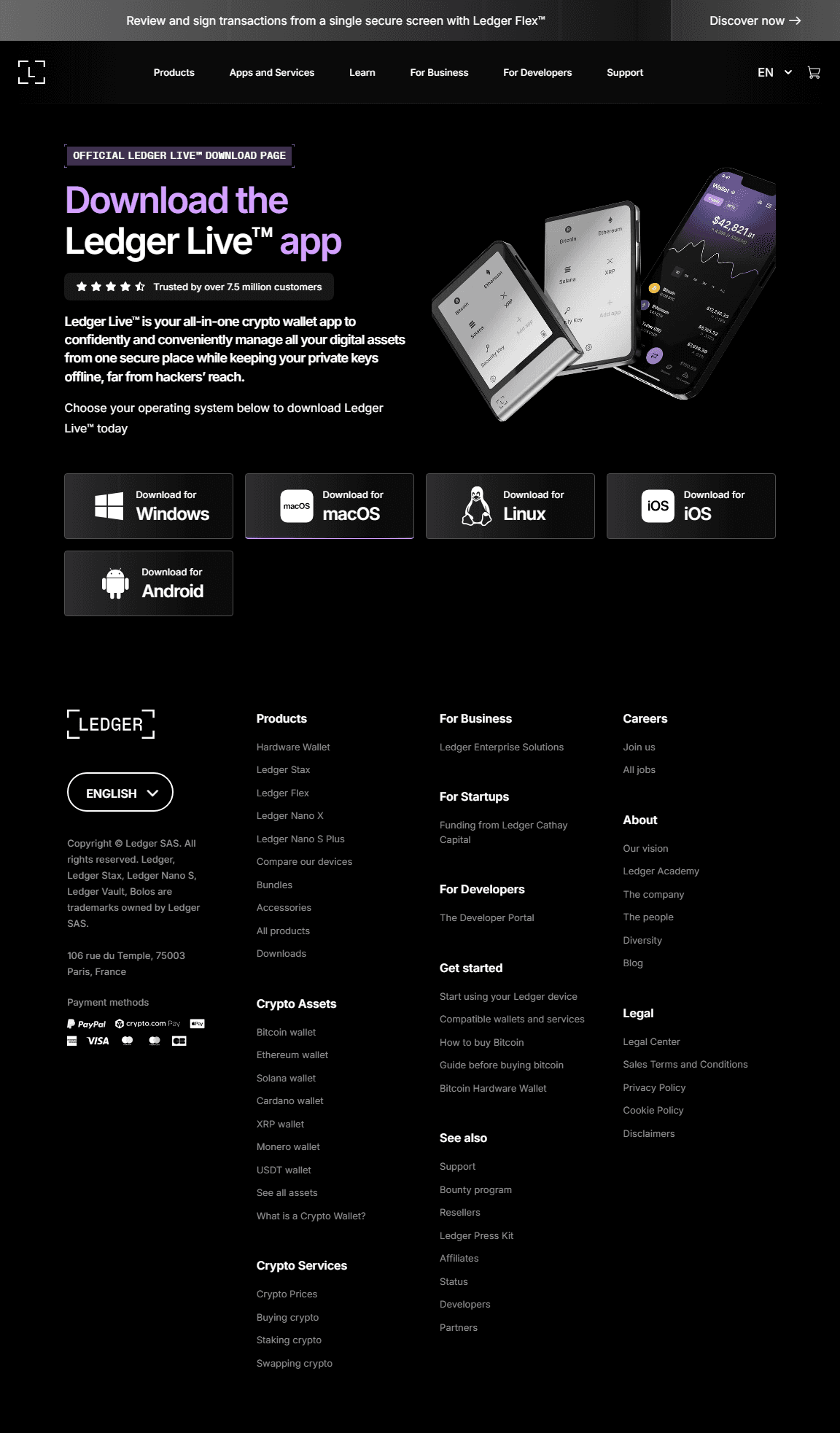
Ledger Live Login: A Complete 1200-Word Guide
The world of cryptocurrency requires tools that combine security, convenience, and full control. Ledger Live stands out as one of the most trusted management platforms for digital assets, offering users the ability to store, track, send, receive, and stake their crypto while maintaining ownership of their private keys. At the heart of this experience is the Ledger Live login process, a secure and streamlined method for connecting your Ledger hardware wallet to the software interface.
Unlike traditional login systems that depend on usernames and passwords, Ledger Live relies on a direct connection with your Ledger hardware wallet — making it one of the most secure authentication methods available in the crypto space. This comprehensive guide explains how the login process works, why it is structured this way, and how users can optimize their experience while keeping their assets safe.
Understanding Ledger Live Login
The term "Ledger Live login" can sometimes be confusing because Ledger Live does not operate like typical online accounts. There is no email-based sign-in, no password retrieval process, and no centralized database holding user credentials. Instead, the “login” process refers to connecting and unlocking your Ledger hardware device so the Ledger Live app can communicate with it.
This design is intentional. Ledger’s entire ecosystem is built on self-custody. That means your crypto access is determined solely by your hardware wallet and recovery phrase, not by cloud storage or web-based credentials. The login in Ledger Live is simply a gateway that verifies you are the actual owner of the device being connected.
When you open the Ledger Live app, you will be asked to plug in your Ledger hardware wallet or activate it wirelessly (depending on the model). After entering your device PIN, the app recognizes your wallet and grants access to your accounts, balances, portfolio history, and transaction tools. This process ensures that only someone holding the physical device and knowing the PIN can access the wallet.
Why Ledger Live Login Is Different
Most online platforms store user information on servers, which introduces exposure to hacking, phishing, identity theft, and unauthorized access. Ledger Live eliminates these threats by removing the need for cloud-based authentication. Your crypto is never tied to an online account. Instead, the software connects only to your hardware wallet’s secure element.
There are several advantages to this system:
1. No centralized database
Because there is no traditional login, there is no database for attackers to target. Hackers cannot breach a nonexistent repository of passwords, accounts, or personal data.
2. Physical verification required
Even if someone discovered your device PIN, they cannot access Ledger Live or your assets without having the physical wallet.
3. No password theft
Since Ledger Live does not use passwords, common attacks such as brute force, credential stuffing, or phishing emails become ineffective.
4. Offline private key storage
Your private keys never move from the hardware wallet. Ledger Live acts only as an interface but never stores or transmits sensitive information.
These characteristics make Ledger Live login one of the safest ways to manage cryptocurrencies.
How to Log In to Ledger Live: Step-by-Step
Although Ledger Live doesn’t use a traditional login screen, the process of accessing your wallet is simple and follows a strict security structure.
Step 1: Install and open Ledger Live
Open the Ledger Live application on your desktop or mobile device. The dashboard will load, prompting you to connect your hardware wallet if it isn’t already.
Step 2: Connect your Ledger device
Depending on the model, you may use a cable or Bluetooth connection. Ledger Nano X supports Bluetooth, whereas Ledger Nano S models require a USB connection.
Step 3: Enter your PIN
Your Ledger device will prompt you to enter the PIN you created during setup. This PIN is the first layer of protection for your wallet.
Step 4: Unlock and allow Ledger Live access
Once you enter the correct PIN, the device unlocks. Ledger Live begins reading wallet information to display your accounts, balances, and settings.
Step 5: Access your dashboard
Now you are effectively “logged in.” You can send and receive assets, view your portfolio, check transaction histories, stake tokens, or interact with supported decentralized apps.
This hardware-based login method eliminates the usual vulnerabilities associated with online authentication systems.
Security Features Built Into Ledger Live Login
Ledger Live is designed with layered protection, each contributing to a secure login experience.
1. PIN Protection
Your PIN must be entered directly on the device buttons, making it resistant to keyloggers or screen-tracking malware.
2. Secure Element Chip
Ledger hardware wallets contain a specialized chip used in passports and payment cards. This chip protects your private keys from physical and digital attacks.
3. Recovery Phrase Safeguard
If your device is lost or damaged, your recovery phrase can restore access. However, Ledger Live never displays or asks for your recovery phrase. Any request for it is always a scam.
4. Device Verification
Each time Ledger Live connects to your device, it verifies the integrity of the hardware and firmware. This ensures the device has not been tampered with.
5. Local Encryption
Settings and portfolio data within Ledger Live are stored locally on your device and encrypted for additional privacy.
These layers form a robust system that protects users even in high-risk environments.
Common Login Issues and How to Resolve Them
Although Ledger Live is easy to use, users occasionally run into difficulties when logging in. Most issues arise from hardware connection, outdated software, or USB port conflicts.
1. Ledger device not detected
This is usually caused by:
Faulty USB cables
Incompatible USB ports
USB drivers needing updates
Ledger Live not updated to the latest version
Switching cables or ports and ensuring updates are installed often resolves the issue.
2. Incorrect PIN entry
Entering the wrong PIN multiple times will eventually reset the device. This is a security feature. If reset, you can restore the device using your recovery phrase.
3. Firmware not up to date
Ledger devices must run current firmware to maintain protocol compatibility. Ledger Live will notify you if a device update is required before logging in fully.
4. Bluetooth issues on mobile
For wireless devices, ensure Bluetooth is enabled, and keep the device close to your phone with no interference nearby.
5. Ledger Live app malfunction
Occasionally, clearing cache data or reinstalling Ledger Live can solve performance or detection problems.
With proper maintenance, the login process remains smooth and consistent.
Tips to Keep Your Ledger Live Login Secure
Even though Ledger Live uses one of the safest login systems available, users should still follow best practices to maintain maximum protection.
1. Never share your recovery phrase
This phrase is the only method to restore your wallet. No employee, software, or website should ever request it.
2. Keep your device firmware updated
Updates include new security patches and improved functionality.
3. Avoid public computers
Using Ledger Live on unfamiliar machines increases the risk of malware exposure.
4. Protect your PIN from being seen
Always enter it privately and avoid simple number patterns.
5. Enable password lock for Ledger Live
Although not required, Ledger Live allows you to add a local password to prevent unauthorized access to app data.
6. Store your hardware wallet safely
Keep your device in a secure physical location when not in use.
By following these guidelines, your login process becomes even more secure.
Why the Ledger Live Login Process Matters
The login system for Ledger Live is more than just a technical detail; it is the core of Ledger’s philosophy of user empowerment and decentralized control. Traditional login systems require trust in third-party servers, but Ledger’s model removes intermediaries. Your crypto is yours — and only yours.
This structure significantly reduces the risk of:
Account hacks
Phishing attacks
Unauthorized transfers
Server-side data breaches
For users managing valuable portfolios, this provides unmatched peace of mind.
Final Thoughts
Ledger Live login represents a unique approach to digital asset security. Instead of relying on conventional authentication methods, it combines hardware protection, encrypted communication, and a locally controlled interface. Every time you “log in,” you are confirming ownership through the physical wallet itself, ensuring that no one else can access your crypto without the device and PIN.
From experienced investors to first-time crypto users, Ledger Live offers a safe, intuitive, and highly reliable environment for managing assets. Its login process is not simply a technical step — it is the foundation that keeps your digital wealth secure, accessible, and under your complete control.