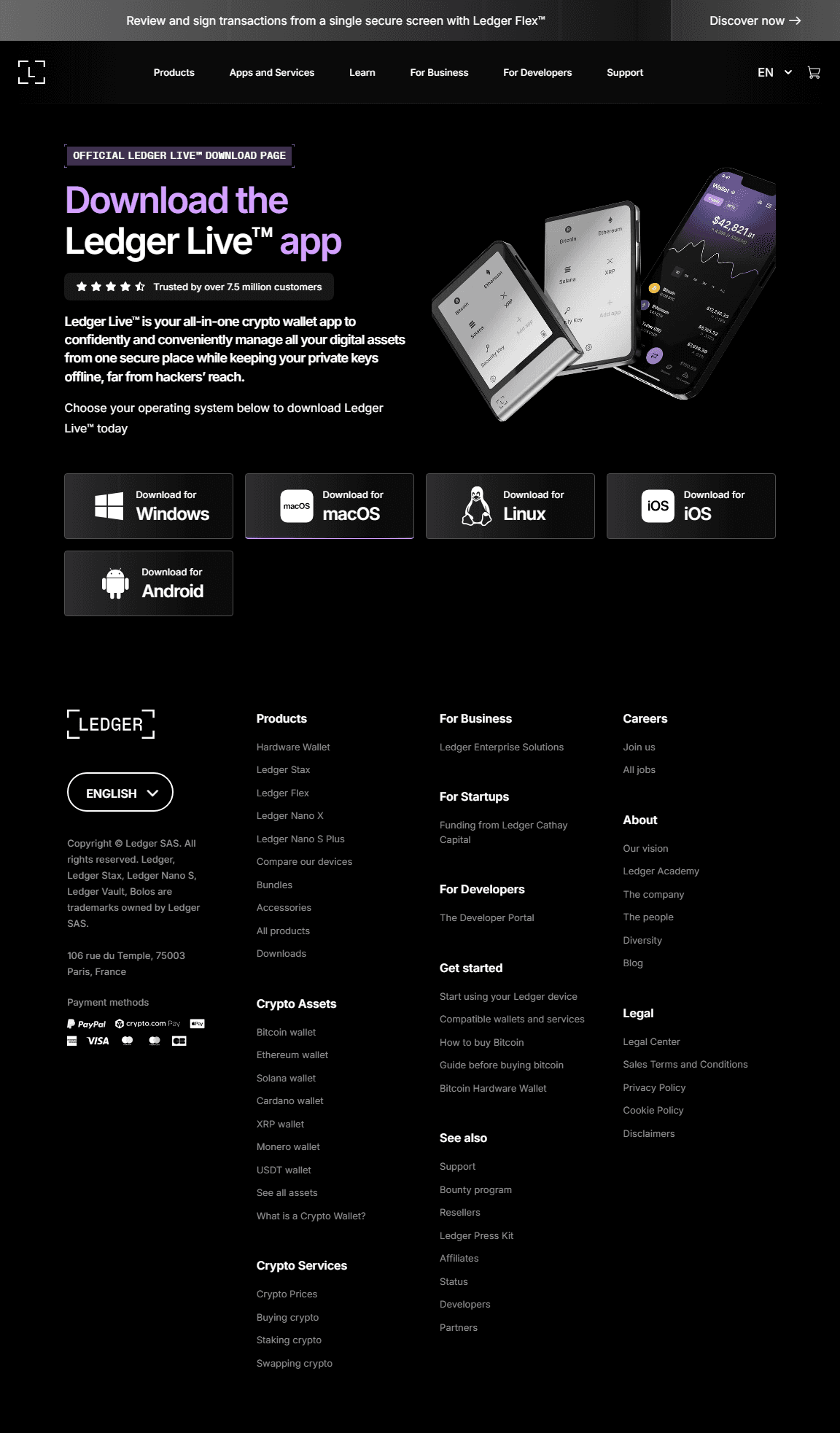
Ledger Live Login: A Detailed 1200-Word Guide for Secure Crypto Access
Managing cryptocurrency requires a balance of convenience and strong security principles. Ledger Live is designed as the official companion application for Ledger hardware wallets, and its login system is built around the idea of complete user control. Instead of relying on online accounts or centralized credentials, Ledger Live uses your Ledger device itself as the authentication method. This creates a login process unlike any traditional platform, ensuring that access to your digital assets is always protected by physical verification.
This guide explains in detail how the Ledger Live login system works, how to use it effectively, and how to avoid common mistakes while keeping your digital holdings protected.
Understanding the Concept of Ledger Live Login
When people hear the phrase “Ledger Live login,” they often imagine a standard login interface where an email and password are required. Ledger Live does not operate this way. The platform does not use cloud accounts, does not store user credentials, and does not authenticate through centralized servers. Instead, the software communicates with your Ledger hardware wallet to verify ownership.
In practical terms, logging in means unlocking your hardware wallet and allowing the Ledger Live app to read and display your crypto accounts. Since the private keys remain inside the device, the login method provides several layers of security that are not available with regular web wallets or mobile wallets.
This approach is ideal for users who want complete control over their digital assets without exposing sensitive keys to online environments or third-party systems.
How the Login Process Works
Ledger Live’s login system revolves around three essential elements: the hardware device, the PIN code, and the connection to the Ledger Live app. Here is an overview of how the process unfolds each time you access your wallet.
1. Launching the Ledger Live App
When you open Ledger Live on your desktop or mobile device, the dashboard loads and waits for a recognized Ledger device to be connected. At this point, you cannot view your accounts or balances until the hardware wallet is verified.
2. Connecting Your Ledger Device
Depending on your Ledger model, you either plug in your device using a USB cable or connect via Bluetooth. Ledger Nano S models typically require a wired connection, while Ledger Nano X can connect wirelessly.
3. Unlocking the Device with Your PIN
The next step is entering your PIN using the physical buttons on the device. This PIN acts as the first line of defense. Ledger Live cannot retrieve or reset your PIN, which reinforces its security model.
4. Allowing Ledger Live to Access the Wallet
After entering the correct PIN, the device becomes fully accessible. Ledger Live reads your account data, synchronizes balances, and verifies the firmware state. The application then displays your dashboard, signifying that you have successfully logged in.
5. Full Access to Your Accounts
Once the login process is complete, you can view your portfolio, manage transactions, interact with decentralized applications, and configure settings. Throughout the session, Ledger Live maintains communication with your device whenever a sensitive action is attempted.
This unique login method ensures that no one can access your funds unless they physically possess your Ledger wallet and know its PIN.
Why Ledger Live Uses a Different Login Method
Traditional platforms use online login systems because they need to authenticate users remotely. However, in the world of crypto, centralized login systems pose significant risks. If servers are compromised, user accounts can be exposed. Ledger avoids this risk entirely by removing passwords and server-based authentication.
Key Benefits of Ledger’s Login Model
1. No Dependency on Servers
Ledger Live does not rely on a stored database of credentials, eliminating a major attack surface that hackers often target.
2. Complete Ownership
Your crypto ownership is tied to your device and recovery phrase, not an email account or third-party server.
3. No Password Vulnerabilities
Password-based systems face risks like phishing, brute force attacks, and credential leaks. Ledger’s model avoids these issues.
4. Hardware-Based Verification
The hardware wallet verifies all sensitive actions, preventing remote attackers from approving transactions on your behalf.
5. Offline Storage of Private Keys
Even while logged in, your private keys never leave your Ledger device. Ledger Live merely provides a visual interface.
This approach offers one of the strongest crypto login systems in use today.
Using Ledger Live After Logging In
Once you complete the login process, Ledger Live becomes the command center for managing your digital assets. It consolidates several important functions into one streamlined interface.
Portfolio Overview
You can view your total holdings, track changes in value, examine market movements, and analyze your asset distribution. The portfolio section updates automatically based on real-time market data.
Send and Receive Cryptocurrency
Sending crypto requires confirmation on your Ledger device, preventing unauthorized transactions. Receiving crypto is equally simple: Ledger Live generates an address that you verify on the device screen to ensure accuracy.
Staking and Earning Rewards
Ledger Live supports staking for several major assets. Your coins remain secured by the hardware wallet while they earn rewards through validator participation.
Swapping and Buying
Integrated swap and purchase options allow users to convert or acquire crypto without transferring funds to exchanges. All transactions remain protected through hardware verification.
Updating Apps and Firmware
Ledger Live enables secure installation of firmware updates and crypto apps on your device. Regular updates help reinforce security and expand support for new networks.
Troubleshooting Ledger Live Login Issues
Although the login system is straightforward, occasional issues may arise. Most can be solved with simple adjustments.
1. Device Not Recognized
This is typically due to:
Faulty USB cables
Disabled USB drivers
Outdated Ledger Live versions
Incorrect USB port selection
Switching cables, updating software, or restarting the computer often solves the problem.
2. Incorrect PIN Attempts
Entering the wrong PIN too many times resets the device for security reasons. You can restore access using your recovery phrase on a new or reset Ledger device.
3. Bluetooth Connection Issues
For wireless models:
Ensure Bluetooth is enabled
Keep the device close to the phone
Avoid interference from other wireless signals
4. Ledger Live Not Syncing
Clearing the cache or reinstalling the app can help if the interface is stuck or slow.
5. Firmware Mismatch
Ledger Live may require you to update your device before allowing full access. These updates preserve functionality and maintain safety.
Best Practices for a Safe Ledger Live Login Experience
Even with Ledger’s robust security design, users must follow basic safety habits.
1. Protect Your PIN
Avoid simple sequences and keep the PIN private when entering it.
2. Never Share Your Recovery Phrase
No legitimate tool or employee will ever request your recovery phrase. Protect it as your ultimate backup.
3. Keep Software Updated
Both Ledger Live and the hardware firmware should be updated regularly for optimal performance and security.
4. Avoid Using Public Devices
Public computers may contain malware that attempts to interfere with the Ledger Live application.
5. Enable Password Lock in Ledger Live
For additional security, you can add a local password to prevent unauthorized individuals from viewing the app.
6. Store Your Hardware Wallet Safely
Treat the device like a valuable asset. Keep it in a secure place when not in use.
These habits significantly enhance the overall integrity of your crypto management process.
Why the Ledger Live Login System Matters
The login method is not just a technical choice—it is a philosophy of user autonomy. Ledger prioritizes privacy and decentralization by ensuring that your access is determined solely by your hardware wallet. The absence of traditional credentials prevents many of the risks associated with centralized platforms.
This security model protects users against:
Online account breaches
Password theft
Remote unauthorized transactions
Cloud database hacks
Phishing attacks
Ledger Live’s login system represents a powerful combination of cryptographic protection and user-first design.
Final Overview
The Ledger Live login process is one of the most secure authentication systems in the crypto world. By requiring hardware verification, PIN entry, and device integrity checks, Ledger ensures that only the rightful owner can access and manage digital assets. The system eliminates the need for passwords, avoids centralized vulnerabilities, and provides unmatched control over your cryptocurrency.
With its intuitive interface and hardware-centered structure, Ledger Live enables users at every experience level to manage their crypto portfolios safely and efficiently. Whether you are sending coins, staking assets, viewing NFTs, or exploring decentralized apps, the login process forms the protective shield that keeps your digital wealth secure.