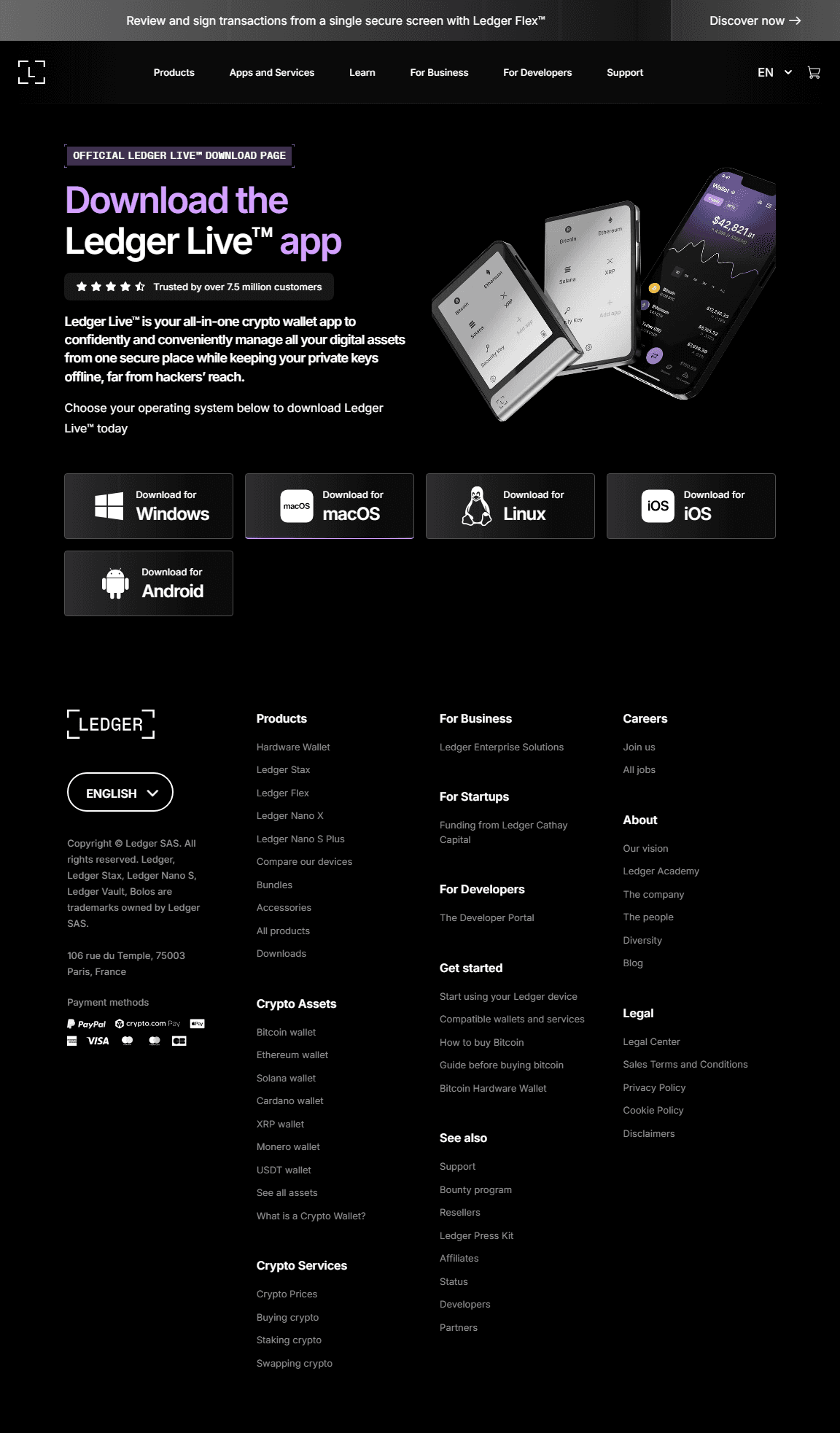
Ledger Live Login: A Comprehensive 1200-Word Guide for Secure Crypto Access
As digital assets continue to evolve, the importance of having a secure and reliable platform to manage them becomes increasingly essential. Ledger Live, the official companion software for Ledger hardware wallets, is designed to give users complete control over their cryptocurrency while ensuring maximum protection. Central to the platform’s safety and functionality is the Ledger Live login process, which is built very differently from traditional online login systems. Instead of usernames and passwords, Ledger Live relies on hardware authentication, local verification, and offline key management.
This extensive guide explores how Ledger Live login works, why it is structured the way it is, how to use it effectively, and what steps you can take to keep your assets fully secure.
What Makes Ledger Live Login Unique?
Unlike typical financial platforms, Ledger Live does not create online accounts or require cloud-based credentials. There is no password field, no account registration, and no server storing user data. Instead, logging in refers to the act of connecting and unlocking your Ledger hardware wallet so the software can display your crypto accounts. This structure eliminates many common vulnerabilities associated with centralized systems.
The login process is entirely local. All sensitive actions depend on the physical device, meaning your crypto cannot be accessed without the hardware wallet and its PIN. Ledger Live functions as an interface, but the security core remains the device itself.
This design reinforces Ledger’s mission of complete self-custody. Your wallet, your keys, your access.
How Ledger Live Login Works Step by Step
Although Ledger Live does not follow a typical login format, the process is highly structured. Each step is engineered to ensure that only the rightful owner of the hardware wallet can access the account data.
Step 1: Open the Ledger Live Application
When you launch Ledger Live on your computer or phone, the interface loads but remains locked until a hardware device is verified. Your portfolio and accounts will not appear until the device is connected.
Step 2: Connect Your Ledger Hardware Wallet
Depending on your Ledger model, the connection method varies:
Ledger Nano S / Nano S Plus: Connect via USB cable.
Ledger Nano X: Connect via USB or Bluetooth on supported devices.
The moment the device is connected, Ledger Live attempts to establish secure communication.
Step 3: Enter the PIN on Your Ledger Device
Every Ledger hardware wallet requires a PIN to unlock. This PIN must be entered directly on the device’s buttons, not on the phone or computer, preventing malware or keyloggers from capturing it.
Ledger Live cannot bypass the PIN. If the device isn’t unlocked, access will not be granted.
Step 4: Authenticate the Connection
Once the PIN is accepted:
The device unlocks
Ledger Live verifies the device’s firmware
The app synchronizes account balances
Your dashboard loads fully
This marks the completion of the Ledger Live login process.
Step 5: Manage Your Crypto Securely
After login, you can:
View and track your portfolio
Send and receive crypto
Stake supported assets
Swap tokens
Install or update crypto apps on the device
Explore compatible Web3 tools
Throughout your session, Ledger Live will request confirmation on your device whenever a sensitive action is attempted.
Why Ledger Live Avoids Email-Based Logins
Ledger purposely avoids traditional login systems for several important reasons.
1. No Centralized Point of Attack
Because Ledger Live does not store user accounts or passwords, there is no database for hackers to target. This dramatically reduces the risk of widespread account breaches.
2. Full Ownership Over Private Keys
Private keys never leave your hardware wallet. Ledger Live only displays public information and facilitates interaction. Even during login, your keys remain offline.
3. No Password Weaknesses
Passwords can be lost, leaked, reused, guessed, or phished. By removing passwords entirely, Ledger removes an entire category of risk.
4. Hardware-Based Authentication
Only someone holding the device and knowing the PIN can log in. This prevents remote attackers from accessing your portfolio.
5. No Personal Information Stored
Ledger Live does not store emails, names, login credentials, or personal data. This improves privacy and reduces exposure.
This unconventional system makes Ledger Live significantly more secure than many online wallets and exchange platforms.
User Experience After Logging In
Ledger Live becomes your central control panel once the login process is complete. The interface is clean, organized, and designed to offer an easy-to-understand overview of your digital portfolio.
Portfolio Dashboard
The dashboard shows:
Total crypto value
Asset distribution
Market performance trends
Recent transactions
Individual account valuations
This makes it simple to track your growth over time.
Transaction Management
Sending and receiving crypto is intuitive:
Sending: Ledger Live prepares the transaction, but your Ledger device must approve it.
Receiving: You generate an address in Ledger Live, then verify it on the hardware wallet to avoid address manipulation.
This dual-screen verification prevents fraud or malware from altering transaction details.
Staking and Reward Options
Ledger Live supports staking for select cryptocurrencies. When you stake through Ledger Live:
Your coins stay secured on your hardware wallet
Rewards accumulate in your account
Validators are selected through partner integrations
This allows you to grow your holdings passively without compromising safety.
Swaps and Purchases
Built-in tools allow you to exchange crypto or buy assets using partner services. These features ensure convenience while maintaining hardware-level protection.
Troubleshooting Ledger Live Login Issues
While the login process is designed to be smooth, some users may encounter occasional difficulties. Most problems stem from connectivity issues, outdated versions, or incorrect device settings.
1. Ledger Device Not Detected
Possible solutions include:
Trying a different USB cable
Restarting Ledger Live
Updating USB drivers
Switching to another port
Updating the device firmware
For Bluetooth connections, make sure both devices are close together and Bluetooth is enabled.
2. Incorrect PIN Attempts
If the PIN is entered incorrectly too many times, the device will reset automatically. This is a security feature. Access can be restored using your recovery phrase.
3. Ledger Live Not Opening or Syncing
Clearing cache data, updating the software, or reinstalling Ledger Live often resolves such issues.
4. Firmware and App Compatibility
Ledger Live may require a firmware update before allowing full functionality. Keeping your device updated ensures proper login and security performance.
Best Security Practices for Ledger Live Login
While Ledger provides a highly secure framework, users must follow responsible security habits to maintain the integrity of their assets.
1. Keep Your PIN Private
Choose a PIN that is not easy to guess. Avoid common patterns or repeated digits.
2. Never Share Your Recovery Phrase
This 24-word phrase is the master key to your wallet. No software or support representative should ever ask for it.
3. Lock Ledger Live with a Local Password
Ledger Live allows you to set a local password to prevent unauthorized access to the app’s interface.
4. Update Regularly
Outdated software can lead to connection issues and vulnerabilities. Keep both Ledger Live and your hardware wallet updated.
5. Use Trusted Devices
Avoid logging in on computers that you don’t fully trust. Public machines or shared systems may be compromised.
6. Store Your Ledger Safely
Your hardware wallet should be kept in a secure location when not in use. Treat it as you would any high-value item.
Why the Ledger Live Login System Matters
The login process reflects Ledger’s core principle: security through self-custody and hardware protection. Instead of relying on centralized authentication, Ledger uses physical verification and offline key storage to ensure only the owner can access the wallet.
This protects users from:
Remote hacking
Phishing attacks
Credential theft
Database breaches
Unauthorized transactions
Ledger’s approach gives users peace of mind, knowing their crypto remains safe even in a harsh digital environment.
Conclusion
The Ledger Live login system stands out as one of the most secure and user-centric authentication methods in the cryptocurrency ecosystem. By eliminating traditional passwords, removing centralized storage, and relying entirely on hardware verification, Ledger ensures that users maintain full control over their digital assets at all times.
Whether you manage a small portfolio or a large diversified collection of cryptocurrencies, Ledger Live provides a reliable, safe, and intuitive environment for storing, monitoring, and expanding your holdings. The login process is not just a step—it is a shield that protects your financial freedom.